Tag Archives: acrylic paint

The Carving Completes

11 Nov

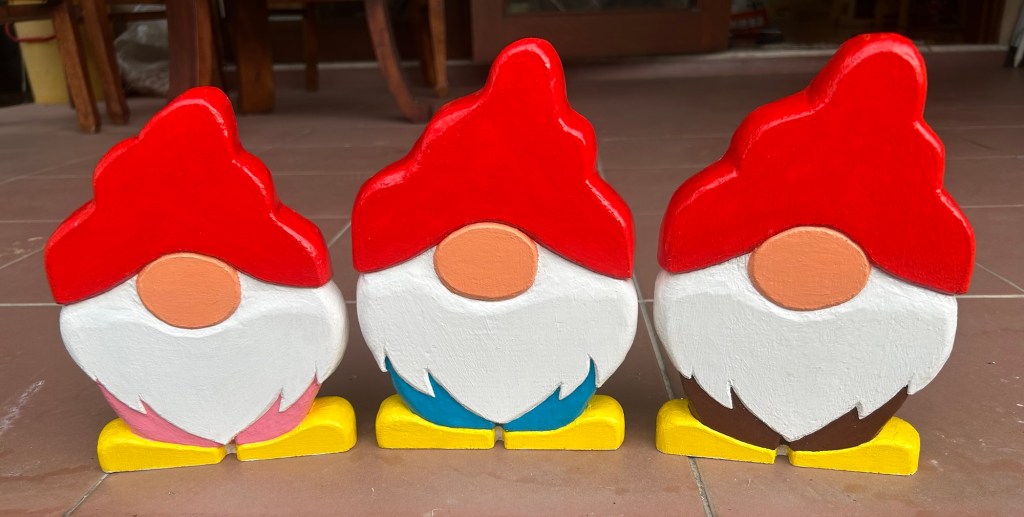
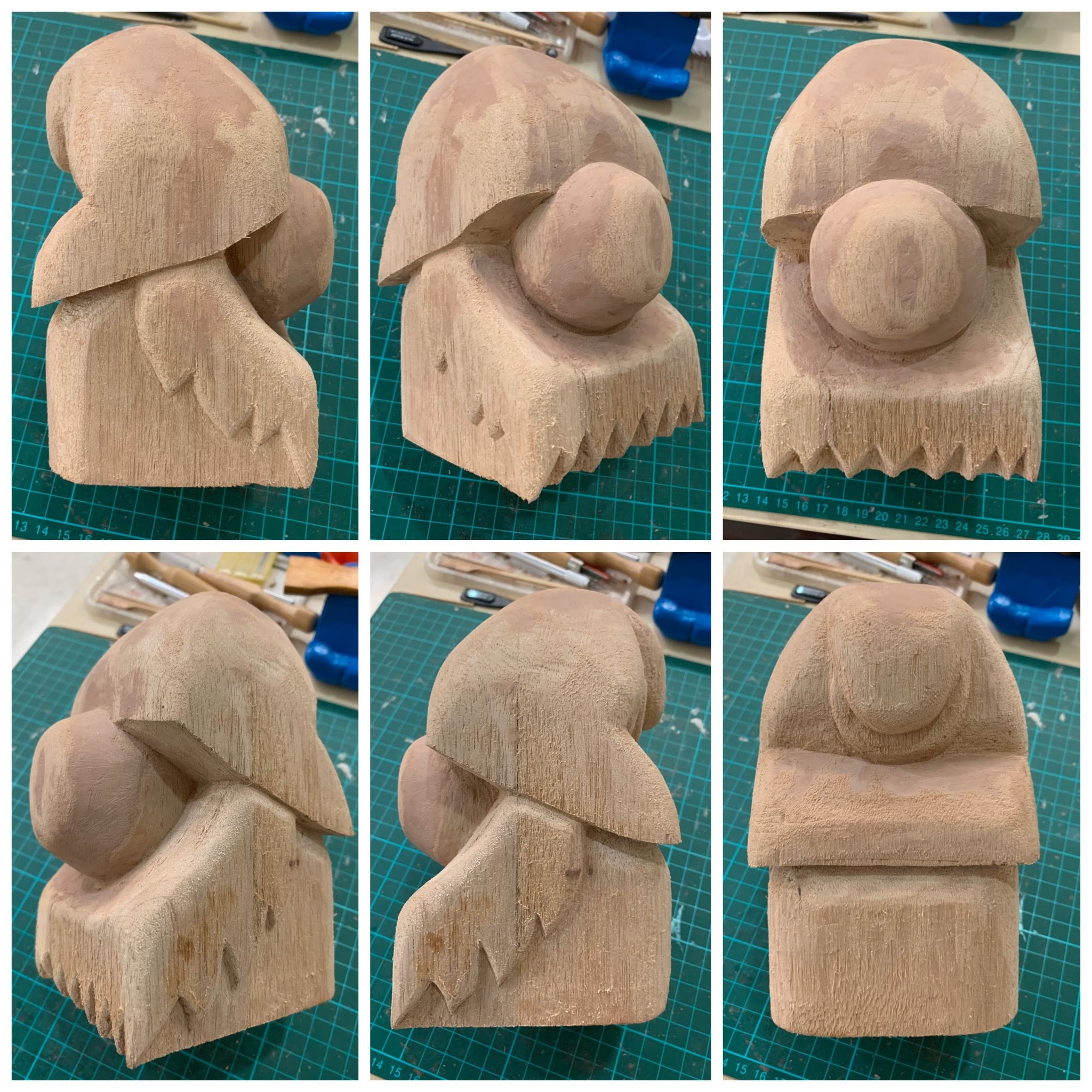
Completing the three gnomes took considerable effort towards the end, after missing the first two deadlines in August and September. And my trip to Japan in October set me back even further. Upon my return, I dealt with a persistent cough that left me too drained to do much.

And when I felt better, I was busy playing golf and pickleball, leaving me little time to focus on the pieces. Eventually, I sat down and added several more layers of varnish before deciding they were good enough to gift the intended recipients. The completion was dated 1st November.

The final picture does not do justice to the gloss varnish that I have painstakingly applied. But the colors are so vibrant, I think I did a good job. Ahem.

The Carving Continues, Part 2

23 Sep

I am at the tail-end of completing the three individual gnomes. I missed the deadline I set for myself, which was the end of August. And it is almost the end of September! I’ve got to get going on it.

Last week, I decided to push myself to complete this with love and dedication. I reduced my golf outings to focus on finishing up the pieces. And I must say it has been so fun and therapeutic to work on them.

Working on all three in tandem, seated at my workstation, I fine-tuned the surfaces and eventually applied acrylic paint. It actually took me only one day for the painting process! If I had known that it would take just a day, I would have prioritized this step sooner! Oh well.

I am very pleased with the outcome. The color choices of the pants are at the request of the individual recipients. At this point, it is only a minor touch-up to even the coat of colors. Lastly, a gloss varnish will be applied to the surfaces to complete the project.

Yay, I am a happy camper with my efforts, and I hope the recipients will be equally pleased to have them in their homes.

Reviving an Old Project, Part 2

5 Aug

It has been time-consuming completing the Three-Gnome piece, with more waiting than the actual time spent working on it towards the end. Being patient is essential, as it takes time for the wood putty to dry before sanding the surfaces down. Then, after putting a coat of white acrylic, I wait again for it to dry. And the cycle repeats to ensure a smooth surface overall. The days pass by so quickly with these steps.

I found myself repeating the process twice before being satisfied with the result and applying the final colors of the gnomes. There was a slight hiccup when I discovered the skin tone acrylic color had dried up in the tube! Oh no.

Top: ready to add color; bottom: new Jaune Brilliant (left) vs old Pink Blush (right)

I ended up purchasing a different brand, so now these new gnomes will look different from the others! Then again, after a four-year break of carving gnomes, a darker shade for the nose would not be so drastic-looking, would it? New start, new colors.

With the final step of applying the varnish, this piece will soon be ready! I’m so proud of pushing myself to complete it, albeit four years later. Better late than never.

Top: original piece; bottom: latest piece. Note the color of the noses.

Coloring the DIY Pieces

28 Aug

DIY project number 31 is coming along slowly. Besides building, there are pieces of furniture and accessories that require painting to complete the composition. Otherwise, the set will look different from the picture on the box unless I want a total change. Unfortunately, as much as I enjoy building my miniatures, I find customizing tedious.

Whenever a set requires a paint job for the loose items, I use my acrylic colors. Sometimes, the DIY sets do provide little pods of colors to use. So, I use those because they are of the right colors instead of having to mix the shades myself.

Recently, I discovered a new trick to shortcut this step. Instead of painting, which requires several layers, I use a color marker! And since I have two brown shades, typical for pieces of furniture, it has been okay. The pieces look just as natural. However, I need to replenish my markers soon because they are drying up fast!

A marker to stain or paint the pieces!

DIY Project #13 or 12A, Part 2

5 Apr

The progress for the latest DIY project has been at a snail’s pace. Could it be due to the superstitious stigma of the number 13? I should refer to it as 12A; then there won’t be all these clouds of doubts or distraction.

But I have to admit, the pieces of this set are very tedious and minute. And I find myself feeling intimidated having to make all those minuscule fruits and vegetables. Sigh. So I have been procrastinating, hence the slow progress. The Chinese instruction manual does not help. Luckily, I managed to download an English PDF version of the manual to cross-check.

Every day, I try to get a piece done up, even if it is at a snail’s pace. Something better than nothing, right? Also, this set is very different from all the others that I have completed.

There are more hands-on steps required, as in painting up pieces of furniture and accessories. Things like the display racks and cabinets need either a paint job or sanded down for a worn look. Vegetable stalks, as well as their display wraps, also require painting! So much work.

The eye-boggling step for the display wraps involves untwirling the paper rope to spread it open before painting! Unbelievable and a real test of patience. With so much effort put in, I’d like to customize the set to my liking by changing and omitting things. We’ll see how it goes as I progress along.

Tiny Pillows Challenge

21 Aug
Deft hands are required to handle these!

Working on the 2-story set that I took over has not been easy. There are so many pillows to make compared to the previous set. Being so tiny, the pillows are harder to hold and glue, and slows down my progress.

And as if this is not enough a deterrent, I discovered two pieces are missing to make the bedside table! I searched high and low, thinking they could have fallen out but nope, the two pieces were not included at all.

For several days, the problem was on my mind. How do I fix this? One night, the solution presented itself as I spotted a pack of ice cream sticks in my art taboret. It might just work because the sticks are of the same thickness.

So I cut the sizes that were required, and I even had orange acrylic paint to paint up the panels. And before I knew it, the bedside table was completed. Phew. With the problem resolved, I hope no further issues as I continue on.

DIY a DIY project!

A Cut Too Deep, Part 2

22 Nov

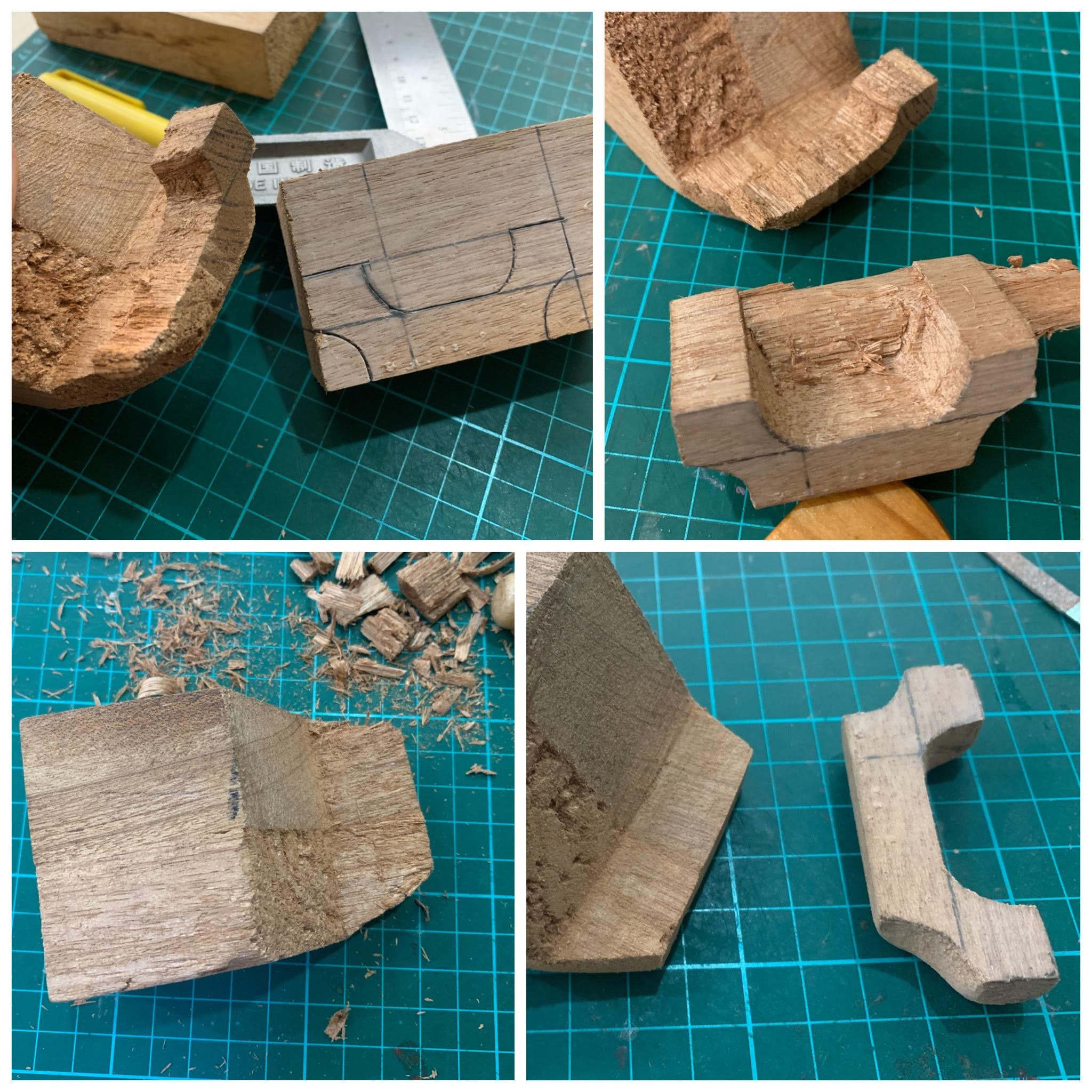
My MacGyver skills came in handy when it came to rescuing the Whale with the broken tail. Given a second chance to be completed and not abandoned, it would have a whole tail section transplant instead of an itty-bitty prosthetic!

This was what I did…

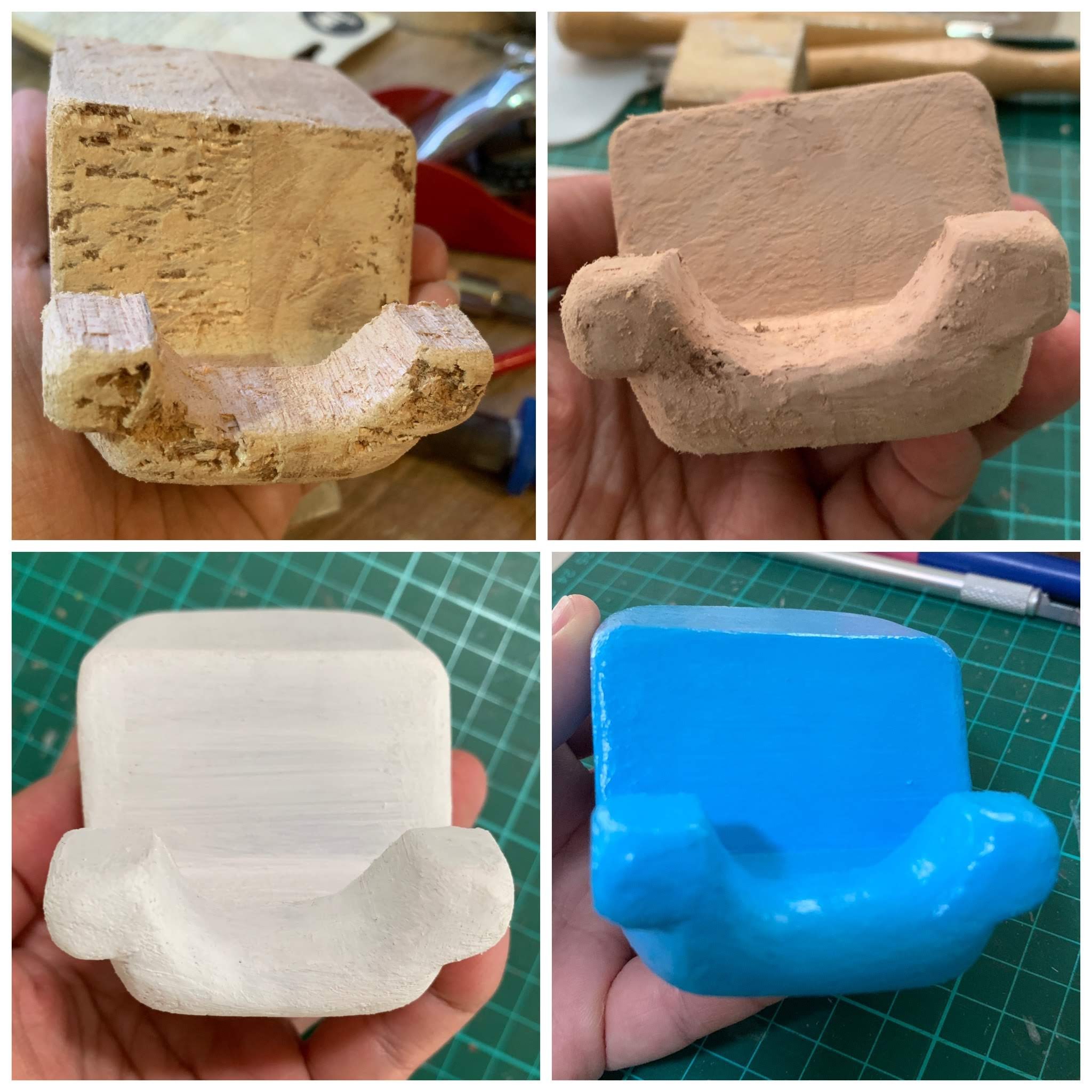
After evaluating the damage and the wood surface, an itty bitty prosthetic tail wouldn’t do because that part of the wood was too porous and it certainly won’t stick. It needed more to be permanent and a transplant was a better option to replace the whole section. A little bit more work but I felt better about this direction.

So I worked on another piece for the tail part. Luckily the Meranti piece that I chose wasn’t that hard and it was quite effortless to get the shape right quickly. But after aligning the pieces, my estimates were off! Haish… it didn’t look right and I ended up having to shave off a little bit more of the bottom part on the main body.

img_6184-1

Bottom pics: Before (L) and after (R) trimming the base to fit the new tail section

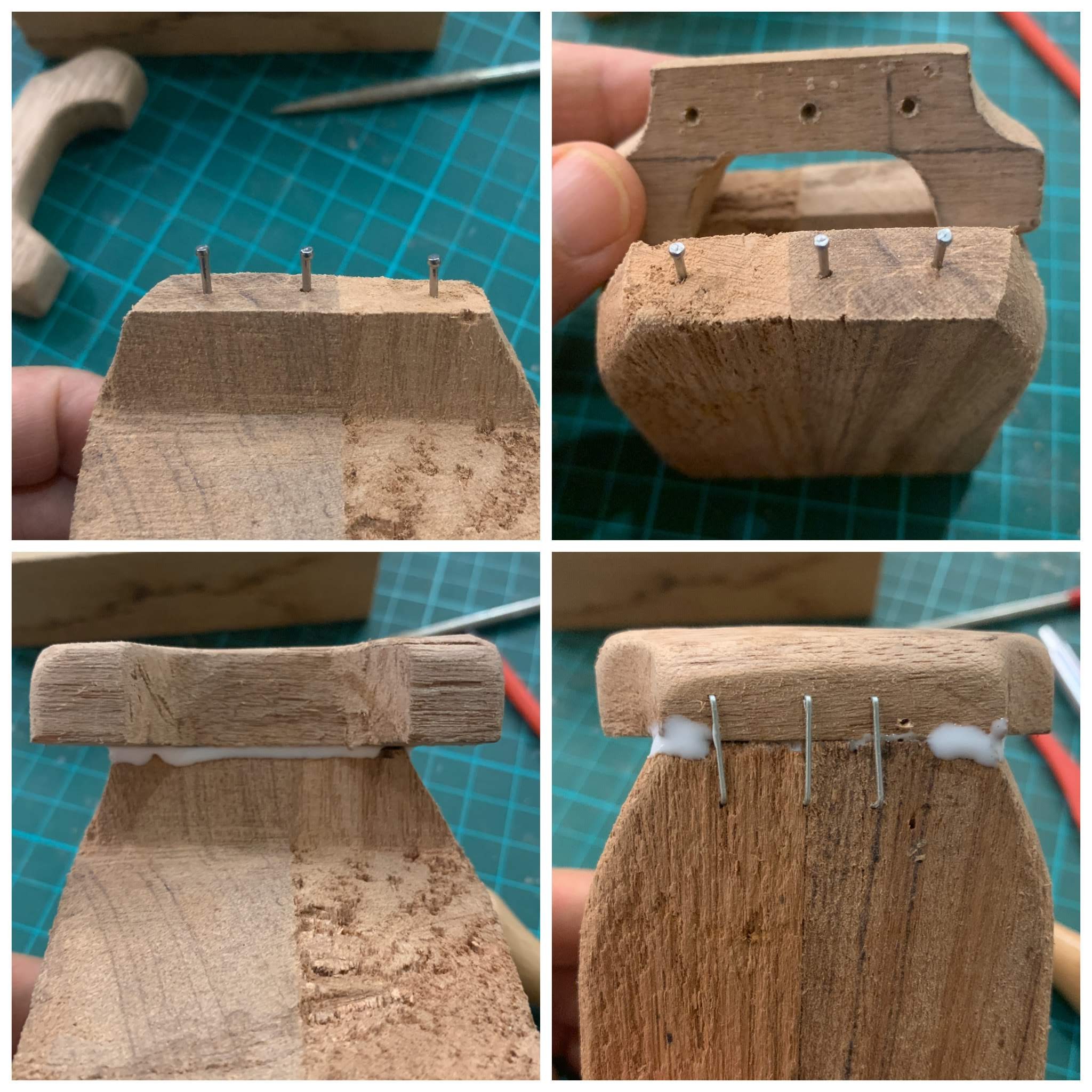
Eventually, with the tiniest nails I could find, the tail section was attached to the main body. I then added Elmer’s glue and stapled the section to secure it.

img_6189

How to add a tail to a whale, with nails, glue and staples

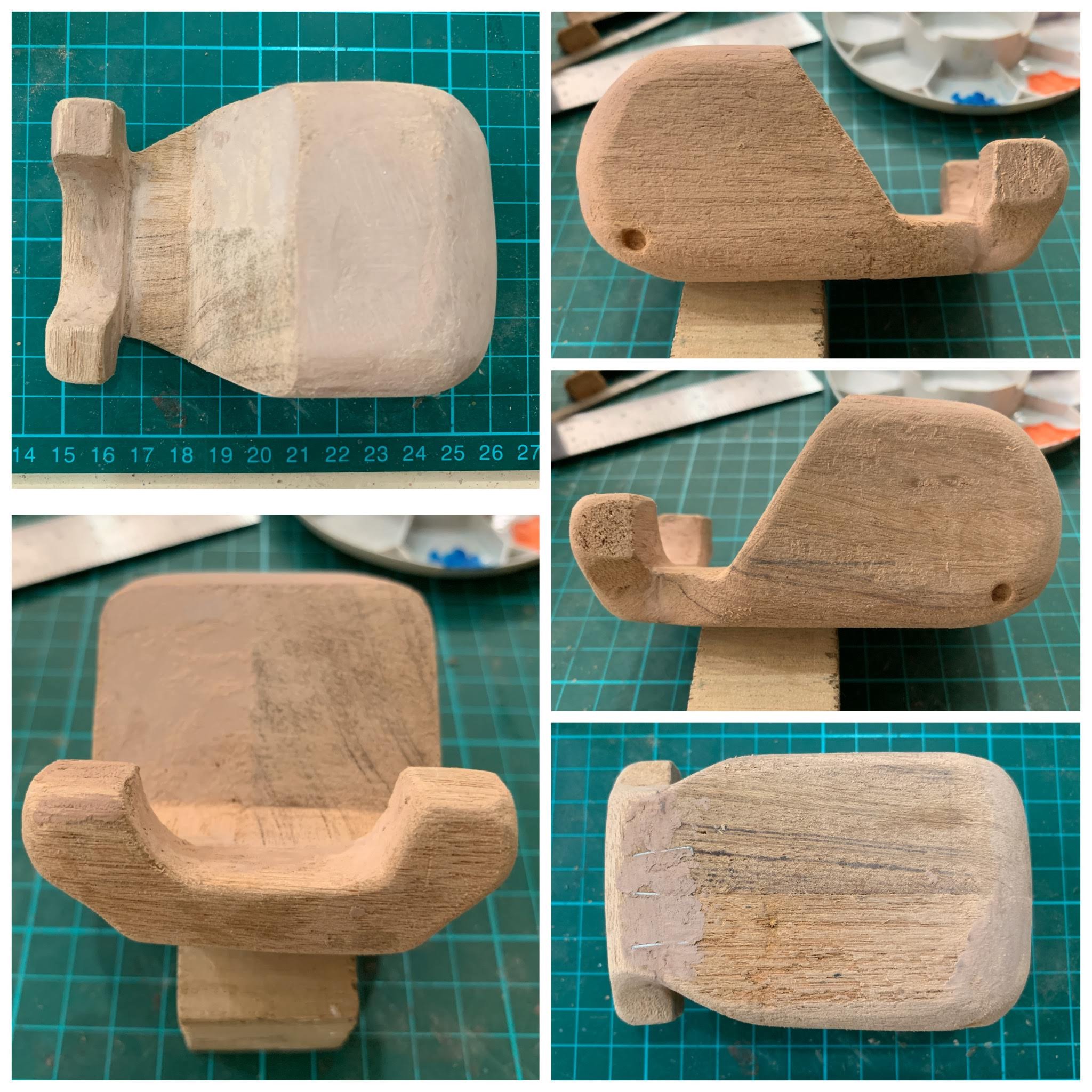
After the glue dried, I started puttying the piece to even out the nooks and crannies and the Whale was starting to look good. Phew! I decided to leave the staples in for peace of mind.

img_6254-1

A saved whale is a happy whale!

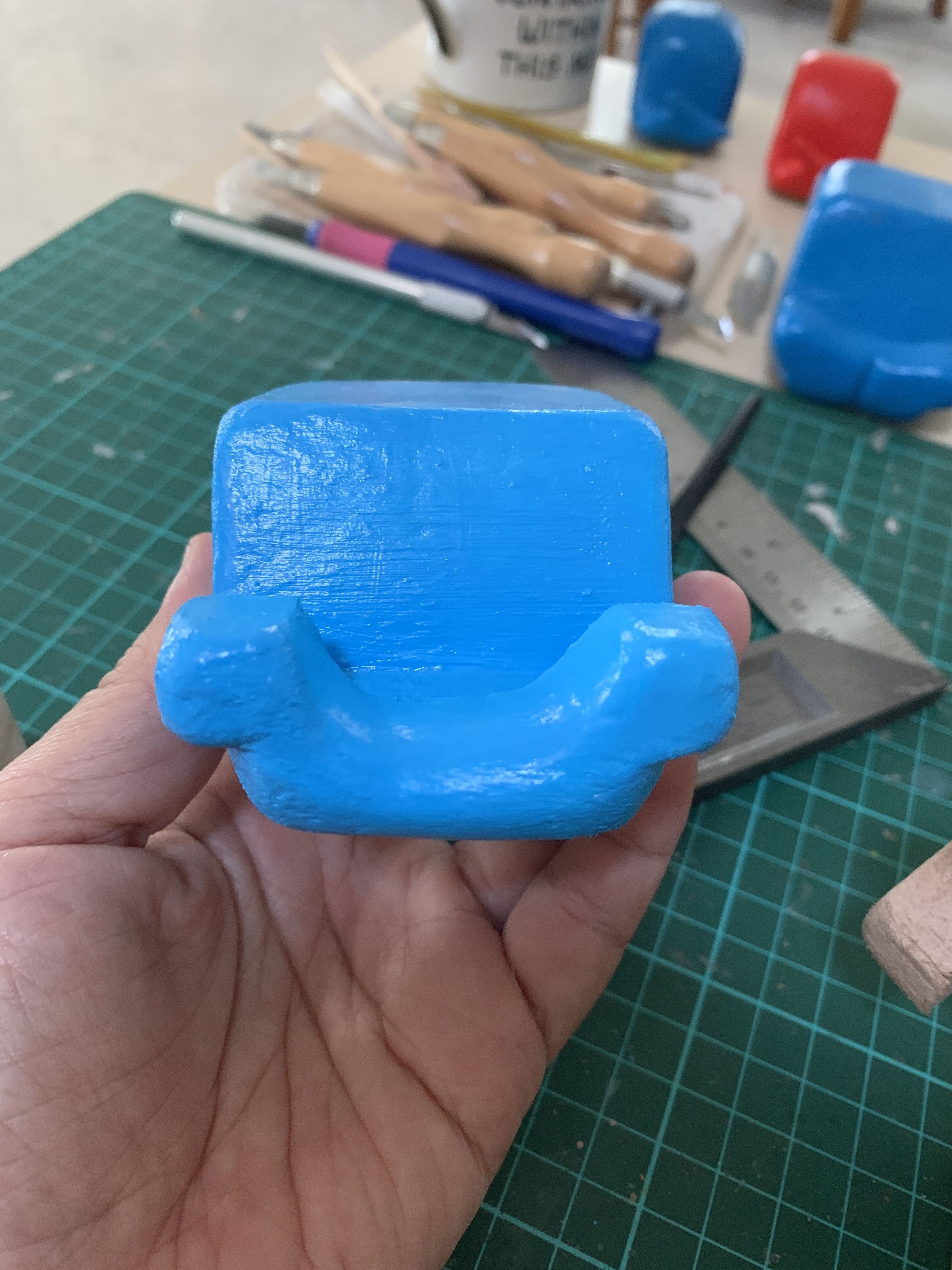
When I’m done applying gesso on it, you can’t tell that this fella had surgery in the first place. And once I decide what color it shall be, it will certainly look good when painted. I’m so glad I persevered on this to give it a second lease in life after that unfortunate cut that was too deep. A saved whale is a happy whale, and a happy me too!

An Ambitious Piece, Part 3

4 Oct

I am at the tail-end to complete Ginormous Gnome. I’m satisfied with how the shape of the cap bob at the back turned out. I think it’s not necessary for it to be even more prominent because then I’d have to glue an add-on piece to it, like what I did for the nose and then tediously carve it down.

img_5373

Nose checked, gap in beard checked!

The nose which posed some challenges initially was resolved. Once I got over these issues, the rest was not that difficult – the body was effortless but the beard was time consuming to shape. However after shaping the beard, I was faced with a new predicament!


The front of the beard was looking so flat! Haish…

After all that effort to give the nose some prominence, the flat beard made all that hard work look wasted. So I decided to glue a piece and several add-ons to the beard part so that it does not appear so flat and square. Quite challenging to carve, shape and puff up that part but it was fun.

img_5401-1

The extra piece to puff up the beard

img_5402

The beard part resolved and putty all over to smoothen the surface

It’s good I am keeping track of what I am doing now because if I ever wanted to carve another Ginormous Gnome, I have this to refer to and would be better prepared. Sometimes what I envision in my mind does not quite come out right, so along the way, I have to adjust.

That being said, Ginormous is progressing at a good pace as I’m at it diligently almost every night. Soon I will be starting a new piece and it will most likely be another whale because recently, I gave one away.

At this point, I’m considering to paint Ginormous in the red and blue uniform like my other Gnomes rather than the Lavender of Gandalf. It should look good.

img_5428

Last step of putting gesso completed before the final paint job!

Have Putty Will Do

13 Aug

This latest piece that I carved had some challenges. The sides were not even and riddled with holes and ‘craters’ because when I split the wood into two, I didn’t do a good job.

After carving out the whale shape, minimizing the craters, the holes were still there but there’s nothing that putty can’t fix. Having putty is essential to fix what carving can’t do smoothly.

img_4312You can’t even tell that prior to it looking like this, once upon a time there were holes. Whale #37 is looking mighty fine I might say and was okay once varnish was applied to coat the paint.

img_4310-1


Fresh Supply, Part 2

23 May

img_2118

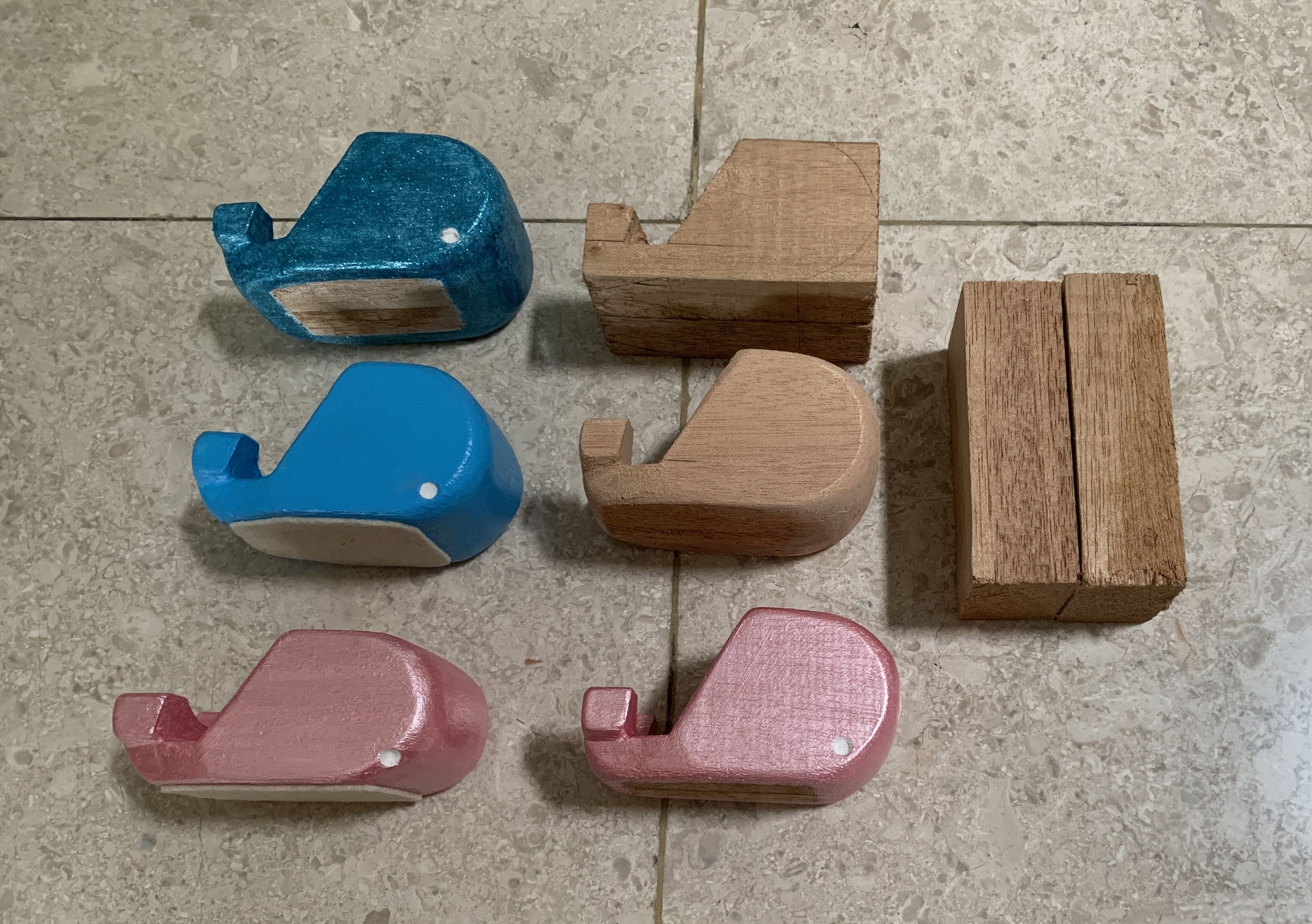
The various stages of carving a Whale

With so much Meranti wood, every evening I am kept busy! When the sun is up, I would be playing golf (especially this week) but when the sun goes down, I would be carving.

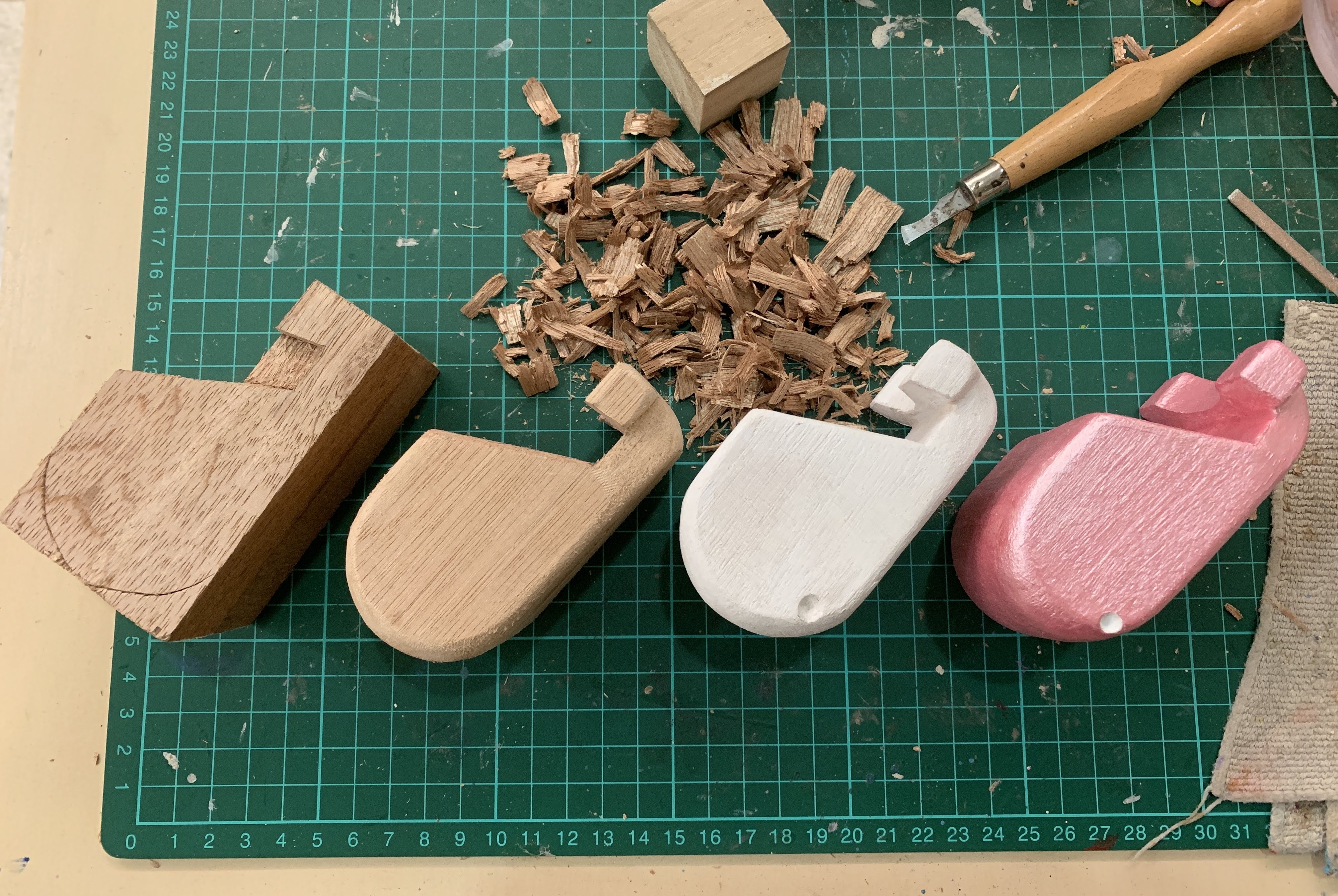
The process is simple, find two Meranti blocks that are about the same size to Elmer-glue together. Then clamp it down with the work bench for a day or so before carving. And although there’s a fixed set of measurements and angles to ensure every piece is standardised, there are still some variations. After all, it’s wood that I am dealing with and the carvings are all hand-made.

The chipping, carving and initial shaping does not take long. This is the fun but dusty and messy part. If I stay focused, I usually get one piece done a night depending on what time I start. It is after the carving that the process takes longer and sometimes tedious too because every step of the way requires time or even have to be repeated.

Details on the eyes and tail take time. The eyes are usually marked, carved out first before drilling to ensure it’s perfectly round and even. For the tail, it’s the curves and corners that I have to work on. Then the sanding and filing to shape the overall curves.

Putty work is next to patch ugly holes and the piece is then left to dry, taking time because this curing process cannot be hurried. When the piece is ready—usually a couple of hours or more depending on how much is applied—more sanding and filing, creating more dust and mess. Sometimes this step needs to be repeated if the patch work is insufficient to even out the holes properly.

img_2128

Putty work: before and after comparison

But when all patch work are completed, a coat of white gesso is applied and the piece is left to dry again for another day. The next step – more sanding to smoothen the surface before a second coat of gesso. By now it’s the fourth or fifth day from the first cut.

Once I am satisfied with the surface, on goes the acrylic paint, two coats over two days. Of all the colors I have, the new Glitter Blue color is most problematic because it requires more than two coats, several coats in fact to be even.

The last process is the gloss varnish, also two coats, before the final touches are added – the felt cloth on the base, the date and my signature and voila! The piece is finally complete.

img_2121

Before and after of the final touches with felt base, date and my signature!

With the fresh supply, I find myself repeating this routine every other night with several pieces overlapping each other in various stages of the process. Tedious, repetitive but enjoyable.
img_1783-1

Working on four pieces in various stages simultaneously